






Sony is enforcing stricter PS Store guidelines, delisting thousands of shovelware titles. Afil Games confirmed it’s losing all 140+ games and future platform access.
INTRODUCTION

If you have noticed the PlayStation Store feeling slightly less cluttered with strange, suspiciously easy Platinum Trophy games lately, you are not imagining it. Sony has been quietly but systematically cleaning house, and one of the studios most associated with this category has now publicly confirmed what is happening behind the scenes.
On June 24, 2026, Afil Games, a Brazilian studio with more than 140 games on PS4 and PS5, posted a statement on X confirming that Sony has blocked it from releasing any further titles on PlayStation platforms and will be removing its entire existing catalogue from the PlayStation Store. The reason, in the studio’s own words: “stricter guidelines for publishing games on its platform” that are “incompatible with our business model.”
For players, it is a long-overdue signal that Sony is getting serious about storefront quality. For developers and publishers, it raises important questions about where the line is being drawn, how many studios are affected, and what this means for the broader indie ecosystem on PlayStation.
WHAT IS SHOVELWARE AND WHY HAS IT BEEN A PROBLEM?
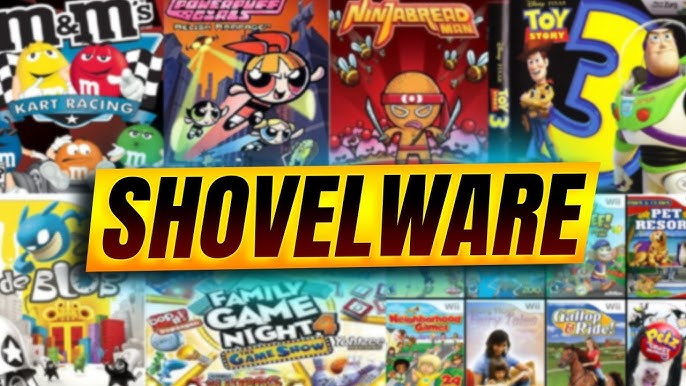
“Shovelware” is the gaming industry’s term for cheap, low-effort software produced rapidly and in volume, typically with little regard for player experience. In the context of digital storefronts like the PlayStation Store, it generally refers to games that:
- Are built by reskinning or minimally modifying existing assets (sometimes called “asset flips”)
- Offer gameplay so simple that anyone can complete the game, and earn every Trophy including the Platinum, in under an hour
- Are priced cheaply (often $1–$5) to encourage volume purchasing from Trophy hunters
- Are released in rapid succession, with the same studio publishing dozens or even hundreds of variations of essentially the same game
The trophy hunting dimension is central to understanding why this category has proliferated on PlayStation specifically. Unlike Xbox achievements, which carry Gamerscore but no universal prestige metric, PlayStation Trophy collections are publicly visible and sorted by rarity. A Platinum Trophy, awarded for completing every challenge in a game, is a meaningful indicator of status in the PlayStation community. Shovelware publishers identified this incentive and built an entire business model around it: make games where Platinum is trivially achievable, price them low enough that Trophy hunters buy without hesitation, and release as many variations as possible.
The result, at its peak, was thousands of titles cluttering the PlayStation Store with names like Piggy’s Farm, Duck Run, Snack and Quack, Collie Call, Cute Bonfire, and Axobubble, all minor variations on the same basic product, exploiting the same psychological driver.
AFIL GAMES: THE STUDIO THAT WENT PUBLIC
Afil Games describes itself as focused on “fun, casual, and accessible games,” a characterisation that critics would contest, but which reflects how the studio has consistently positioned itself.
The studio has published over 140 titles on PS4 and PS5. Many of these titles follow a consistent template: simple visual concept, casual mechanics, straightforward Platinum Trophy, low price. Titles like Piggy’s Farm, Snack and Quack, and The Cute Whale are representative of the catalogue.
On June 24, Afil Games posted this statement on X:
“We would like to share an important update regarding our releases for the PlayStation platform. As many of you may already know, since the beginning of this year PlayStation has been implementing stricter guidelines for publishing games on its platform.
“As a result of these new guidelines and their incompatibility with our business model, PlayStation has decided not to continue its partnership with Afil Games for future releases on the platform. Additionally, our games will be removed from the PSN Store in the near future.
“We would like to sincerely thank all PlayStation players who have supported us throughout this journey. Your enthusiasm and trust have played a significant role in our growth.
“We remain committed to bringing new experiences to our players through Xbox One, Xbox Series, Microsoft Store, and Nintendo Switch.”
The statement is notable for several reasons. It is the first time a directly affected studio has publicly confirmed that Sony’s guideline changes are systematic and dating from “the beginning of this year”, not just a one-off enforcement action. It confirms that the block covers both future publishing and existing catalogue. And the acknowledgement that the new guidelines are “incompatible with our business model” is an unusually candid admission about what that business model was.
HOW BIG HAS THIS PURGE ACTUALLY BEEN?
Afil Games is the most recent confirmed casualty, but it is far from the only one, and the scale of what Sony has been doing is larger than most players have realised.
According to Push Square’s reporting and GamesIndustry.biz coverage, Sony has removed tens of thousands of titles from its storefront in 2026 alone, across multiple waves of enforcement. Key confirmed prior actions include:
- January 2026: Sony removed a large volume of games by ThiGames, a publisher that, before the purge, had more titles on the PS4 and PS5 stores than all but three other developers (Eastasiasoft, Ratalaika Games, and Webnetic).
- April 2026: A further wave delisted approximately 1,000 low-quality titles in a single month.
- June 2026: Webnetic separately confirmed that its time on PlayStation is also coming to an end, corroborating that the enforcement is not limited to a single studio.
Afil Games’ removal adds to this cumulative picture. The January purge, the April wave, the Webnetic confirmation, and now Afil, this is a sustained, multi-month campaign rather than a single one-time cleanup.
Push Square’s coverage notes that some of Afil’s titles appear to be “copy-and- pastes of the same basic idea, with asset flips”, the hallmark pattern that Sony’s guidelines now appear to target directly.
WHAT ARE SONY’S NEW GUIDELINES? WHAT WE KNOW (AND DON’T)
Sony has not publicly published the specific criteria of its updated publishing guidelines. This is the most significant gap in the current reporting, confirmed by GamesIndustry.biz and Eurogamer, both of which note the absence of official detail on enforcement criteria.
What can be inferred from the pattern of removals:
- Repetitive releases: studios publishing dozens of near-identical games with reskinned assets appear to be the primary targets
- Trivial Trophy requirements: games designed specifically around easy Platinum achievement appear to be a trigger
- Asset flipping: reusing the same underlying game code and swapping visual assets appears to be a disqualifying pattern
What Sony has not specified:
- Minimum quality thresholds for graphics, gameplay, or playtime
- Whether the guidelines apply retroactively to already-published titles or only to new submissions (given that existing titles are being removed, some retroactive application appears to be in effect)
- Whether affected publishers have any appeals process
- Whether the guidelines affect smaller-scale casual games that are not shovelware (a meaningful concern for legitimate indie developers)
One detail confirmed across GamesIndustry.biz and Eurogamer reporting: Sony has been implementing these changes since the start of 2026, giving the programme a six-month track record of enforcement before Afil’s public confirmation.
WHY THIS MATTERS BEYOND THE SHOVELWARE CONVERSATION

The removal of low-quality titles might seem like straightforward consumer benefit, and for most players, it is. But the broader implications for the PlayStation publishing ecosystem are worth examining.
For legitimate indie developers, the absence of published guidelines creates real uncertainty. If Sony has not defined its quality thresholds publicly, smaller developers cannot know with confidence whether their games will be accepted. The lack of transparency risks creating a chilling effect on genuine indie submissions alongside the shovelware it targets.
For platform curation, Sony’s approach reflects a meaningful shift. PlayStation has historically maintained a more open publishing environment than Nintendo’s eShop, which has its own separate shovelware problems, and Sony is now moving toward active curation of existing catalogue, not just gatekeeping new submissions. That is a substantially more interventionist approach.
For the Trophy ecosystem, the long-term effect of removing easy Platinum publishers could reset expectations around Trophy collections. If the supply of easy Platinums shrinks significantly, the meaning of larger Trophy counts may shift for a community that has developed an entire vocabulary around distinguishing “earned” from “farmed” collections.
THE PLAYER AND DEVELOPER REACTION
Player reaction to the purge has been overwhelmingly positive, with community commentary on Push Square and other outlets expressing relief that the store will be easier to navigate. Common sentiments:
- Frustration that Sony allowed the situation to reach this scale (“I’ll refrain from asking how Sony let it get this far”)
- Support for the crackdown combined with requests for better native rice-search tools to reduce reliance on third-party sites
- Debate about whether casual, low-effort games have any legitimate place on the store, with a minority view that Sony should not remove them entirely but simply deprioritise them in discovery
The developer community’s reaction is more divided. Some small indie developers have raised concern that vague guidelines could sweep up legitimate low-scope projects alongside obvious shovelware. GamesIndustry.biz notes this tension explicitly, the absence of published criteria means the line between curated curation and arbitrary enforcement is not visible to publishers.
CONCLUSION
Sony’s shovelware crackdown is real, systematic, and larger than most players appreciated before Afil Games went public. Tens of thousands of titles removed, multiple publishers confirmed affected, and a six-month enforcement programme dating from January 2026, all confirmed across VGC, GamesIndustry.biz, and Eurogamer.
What Afil’s statement adds is the clearest direct confirmation yet: Sony’s guidelines are incompatible with the business model that produced these games. That incompatibility is, for PlayStation players who want a curated, navigable storefront, largely the point.
The open question is transparency. Sony has not published its specific criteria, and until it does, the full implications for indie developers outside the obvious shovelware tier remain uncertain. That is worth watching, and worth Sony addressing directly.