








A thorough guide to AI in tech, understanding machine learning, generative AI, automation, ethics, and how artificial intelligence is reshaping the IT workforce and industry.
Introduction
Artificial intelligence has moved from science fiction to the centre of every major technology conversation in the space of just a few years. It is reshaping how software is built, how businesses operate, how decisions are made, and what skills are most valuable in the job market. But alongside extraordinary opportunities, AI also brings significant challenges, ethical, social, and technical, that every informed technology professional needs to understand. This post gives you a grounded, balanced picture of what AI actually is, how its key technologies work, where it creates opportunity, and where it demands caution. By the end, you’ll be equipped to engage thoughtfully with one of the most consequential forces in modern tech.
What Is Artificial Intelligence? (Simple Explanation)
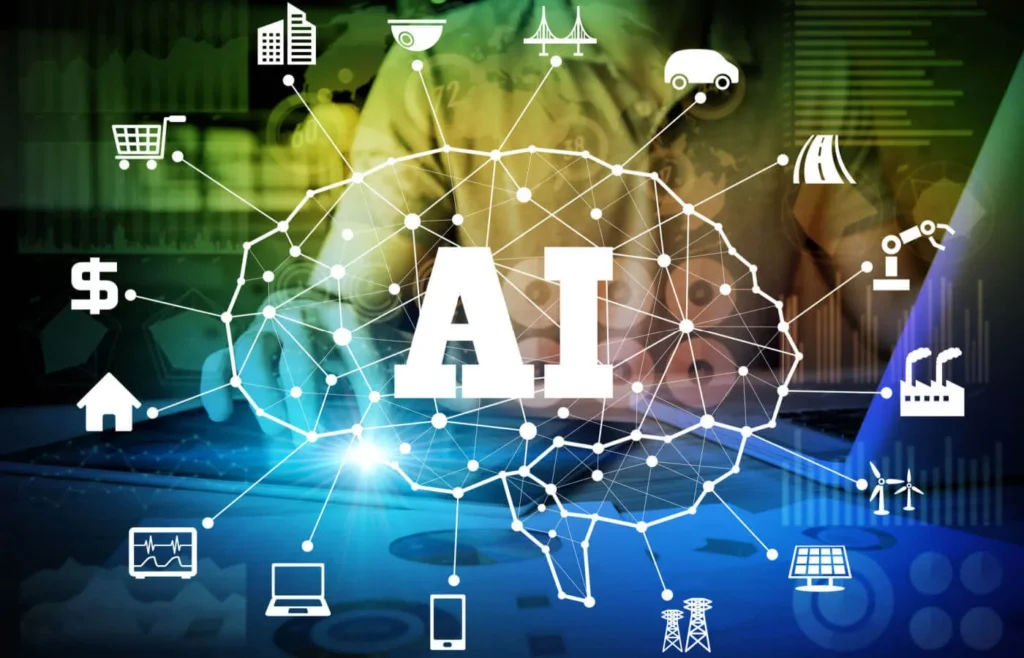
Artificial intelligence is the field of computer science focused on building systems that can perform tasks that would normally require human intelligence, things like recognising speech, identifying images, translating languages, making recommendations, and generating text or code. AI systems don’t think the way humans do; they learn patterns from vast amounts of data and use those patterns to make predictions or produce outputs. The result can look remarkably intelligent, even though the underlying process is fundamentally statistical and mathematical.
Why It Matters
AI is no longer a niche research topic, it is actively embedded in search engines, content platforms, healthcare diagnostics, financial fraud detection, customer service systems, and software development tools. For IT professionals, understanding AI means being able to work alongside AI-powered tools, contribute to AI-driven projects, and anticipate how automation will reshape roles and workflows. For everyone else, it means being an informed participant in a world where AI is making more and more consequential decisions.
Key Concepts You Need to Know
Machine Learning
Machine learning (ML) is the branch of AI where systems learn from data rather than being explicitly programmed with rules. Instead of a developer writing “if the email contains this phrase, mark it as spam,” a machine learning model is trained on thousands of examples of spam and non-spam emails and learns to identify the difference itself. The more data it is trained on, the more accurate it generally becomes.
Deep Learning and Neural Networks
Deep learning is a subset of machine learning that uses artificial neural networks, loosely inspired by the structure of the human brain, with many layers of processing. Deep learning is responsible for the most impressive recent advances in AI, including image recognition, natural language processing, and speech synthesis. It requires large datasets and significant computing power, which is why cloud computing (Week 10) and AI development are so closely linked.
Generative AI
Generative AI refers to AI systems that can create new content, text, images, code, audio, and video, based on patterns learned from training data. Large language models (LLMs) like those powering modern AI assistants are a prominent example. Generative AI has unlocked new possibilities for content creation, software development, and knowledge work, while also raising serious questions about accuracy, intellectual property, and the potential for misuse.
Automation and Its Impact on Work
AI-powered automation is changing the nature of work across industries. Repetitive, rule-based tasks, data entry, document processing, basic customer queries, are increasingly handled by AI systems. This creates efficiency gains for organisations but also displaces certain job functions. At the same time, AI creates new roles: AI trainers, prompt engineers, machine learning engineers, AI ethics specialists, and data scientists are all emerging or growing fields directly tied to AI’s expansion.
AI Ethics and Responsible Use
AI systems can reflect and amplify the biases present in their training data, leading to discriminatory outcomes in hiring, lending, criminal justice, and healthcare. They can be used to generate convincing misinformation. They raise questions about privacy, consent, accountability, and the concentration of power in the hands of a small number of large technology companies. Responsible AI development requires transparency, fairness, human oversight, and clear accountability, principles that are increasingly being codified into regulation around the world.
Common Mistakes or Misconceptions
- “AI understands what it’s doing.” Current AI systems, however impressive, do not understand meaning the way humans do. They are sophisticated pattern-matchers. This distinction matters enormously when evaluating AI outputs for accuracy or using AI in high-stakes decisions.
- “AI will replace all IT jobs.” AI is more likely to change the nature of IT work than eliminate it entirely. Professionals who understand how to work with AI tools, evaluate their outputs, and solve the problems AI creates will be in high demand.
- “AI is always objective because it’s based on data.” Data reflects the world as it has been, including its inequalities and biases. An AI trained on historical data can perpetuate and even amplify existing unfairness if not carefully audited and corrected.
Practical Next Steps
Engage with AI meaningfully with these starting points:
- Explore a large language model hands-on, use an AI assistant to help with a writing task, then critically evaluate the output for accuracy, tone, and limitations. Understanding AI through direct use is invaluable.
- Take the free “AI for Everyone” course by Andrew Ng on Coursera, it is designed for non-technical learners and gives a well-rounded introduction to what AI can and cannot do, and how it affects organisations.
- Following developments in AI ethics and regulation through organisations like the Partnership on AI (partnershiponai.org) or the AI Now Institute, staying informed about the societal dimensions of AI is as important as the technical ones.
Key Takeaways
- AI enables computers to perform tasks that normally require human intelligence by learning patterns from large amounts of data.
- Machine learning, deep learning, and generative AI are the key technologies driving today’s most significant AI advances.
- AI is reshaping work by automating repetitive tasks and creating new specialist roles, not simply eliminating jobs wholesale.
- Ethical considerations, bias, transparency, accountability, and misuse, are inseparable from responsible AI development and deployment.
Related Reading
- Previous week: Cloud Computing Explained: Concepts, Benefits, and Real Uses
- Coming up: The Future of Tech and IT: Skills, Trends, and Career Paths
Call to Action: Subscribe for next week’s final post in the series, a forward-looking guide to the skills, trends, and career paths shaping the future of tech and IT.