




A beginner’s guide to programming logic, understand variables, data types, conditions, loops, and functions, the universal building blocks that underpin every programming language.
Introduction
Before you write a single line of code in any programming language, there is a set of core concepts you need to understand, concepts so fundamental that they appear in every language ever created, from Python to JavaScript to Java to C. These are the building blocks of programming logic: the way software thinks, makes decisions, repeats actions, and organises itself. Understanding these concepts deeply, not just memorising their definitions, but genuinely grasping what they do and why they exist, is the single most valuable investment a beginner can make. Once you understand programming logic, learning any specific language becomes a matter of learning its syntax, the vocabulary and grammar, rather than learning to think in an entirely new way. This post walks through each fundamental concept clearly, with plain-language explanations and real-world analogies throughout.
What Is Programming Logic? (Simple Explanation)
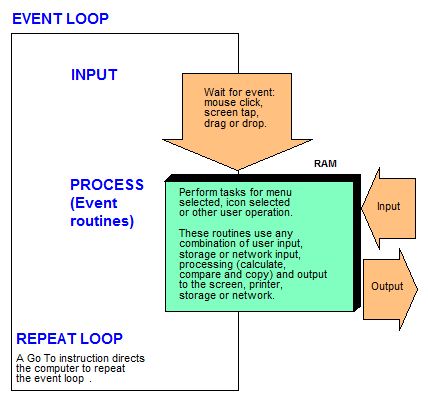
Programming logic is the set of principles and structures that define how a computer programme thinks and operates. It is language-agnostic, meaning these concepts exist in every programming language, even though the specific way they are written differs. Programming logic tells the computer what information to store, what decisions to make, what actions to repeat, and how to organise complex behaviour into manageable pieces. Mastering these fundamentals means you are not learning a single language, you are learning how to programme, period.
Why It Matters
Many beginners make the mistake of diving into a specific language before understanding the underlying logic, and then find themselves memorising syntax without understanding why it works. Starting with programming logic gives you a mental model that makes every language easier to learn, every error message easier to interpret, and every problem easier to break down. It is the difference between understanding a map and blindly following directions, one empowers you to navigate anywhere, the other leaves you dependent on specific instructions.
Key Concepts You Need to Know
Variables and Data Types
A variable is a named container for storing a piece of data that a programme can use and change. Think of it like a labelled box: you put a value in, give the box a name, and refer to it by that name throughout your programme. Every variable stores a particular type of data, called a data type. The most common data types are integers (whole numbers like 42), floats (decimal numbers like 3.14), strings (text like “Hello, world”), and booleans (true or false values). Understanding data types matters because different types support different operations, you can add two integers together, but adding a number and a piece of text requires specific handling.
Operators
Operators perform actions on data. Arithmetic operators carry out mathematical calculations, addition, subtraction, multiplication, and division. Comparison operators compare two values and return a boolean result, is this number greater than that one, are these two strings equal? Logical operators combine boolean conditions, AND (both conditions must be true), OR (at least one must be true), NOT (reverse the condition). These operators are the basic tools with which programmes evaluate situations and make decisions.
Conditions and Control Flow
A condition is a statement that evaluates to either true or false. Control flow is the order in which a programme executes its instructions, and conditions are what allow that order to change based on circumstances. An if statement says: if this condition is true, do this; otherwise, do something else. This is how programmes make decisions. A traffic light programme, for example, might check the current light colour and display the appropriate instruction based on which condition is true. Without conditions, a programme would always do the same thing in the same order, making it nearly useless for real-world problems.
Loops
A loop is a structure that repeats a block of instructions multiple times. Without loops, writing a programme that processes a list of one thousand items would require writing the same code one thousand times. With a loop, you write the code once and tell it how many times, or under what conditions, to repeat. The two most common types are for loops (which repeat a set number of times or once for each item in a collection) and while loops (which repeat as long as a specified condition remains true). Loops are one of the most powerful concepts in programming because they allow a small amount of code to do an enormous amount of work.
Functions
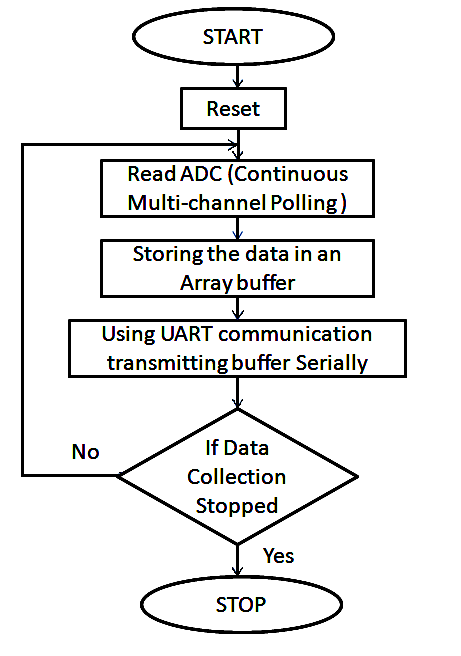
A function is a named, reusable block of code that performs a specific task. Rather than writing the same code every time you need to perform a particular action, you write it once as a function and call that function by name whenever you need it. Functions can accept inputs (called parameters) and return outputs (called return values). They make programmes shorter, more readable, and easier to maintain, and they are the foundation of modular, well-organised code. Thinking in functions, breaking a problem into distinct, named tasks, is one of the hallmarks of experienced programming.
Algorithms, Putting It All Together
An algorithm is a step-by-step procedure for solving a problem or accomplishing a task. Every programme is, at its core, an implementation of one or more algorithms. When you combine variables, conditions, loops, and functions into a sequence that solves a specific problem, you have written an algorithm. Simple examples include sorting a list of names alphabetically, finding the largest number in a collection, or calculating the average of a set of values. Understanding how to design algorithms, breaking problems into clear, logical steps before writing any code, is the most important skill in programming.
Common Mistakes or Misconceptions
- “I need to memorise syntax before I can start programming.” Syntax, the specific way each language writes these concepts, is looked up, not memorised. Professional developers Google syntax questions dozens of times per day. Understanding the logic is what matters; the syntax comes naturally through practice.
- “If my programme produces the right output, the logic must be correct.” A programme can produce the correct result for some inputs while containing flawed logic that fails on others. Testing your code with multiple different inputs, including edge cases, is essential for verifying that the logic is sound, not just the output.
- “Loops and conditions are advanced topics.” These are not advanced concepts, they are fundamental ones. Every useful programme contains conditions and loops. They should be among the very first things a beginner learns and practices, not topics saved for later.
Practical Next Steps
Cement your understanding of programming logic with these hands-on exercises:
- Without using any specific language, write out the logic for a simple programme in plain English, for example, a programme that asks a user for their age and tells them whether they are eligible to vote. Include the variable (age), the condition (if age is greater than or equal to 18), and the two possible outputs. This exercise, called pseudocode, is how professional developers plan complex programmes.
- Open a free, browser-based Python environment like repl.it or python.org/shell and write your first variable, your first condition, and your first loop, even if it is just printing “Hello” five times. Seeing logic execute in real time is the fastest way to make these concepts concrete.
- Work through the Logic and Algorithms section of Khan Academy’s Computing course, it introduces these concepts interactively, without requiring any prior coding knowledge.
Key Takeaways
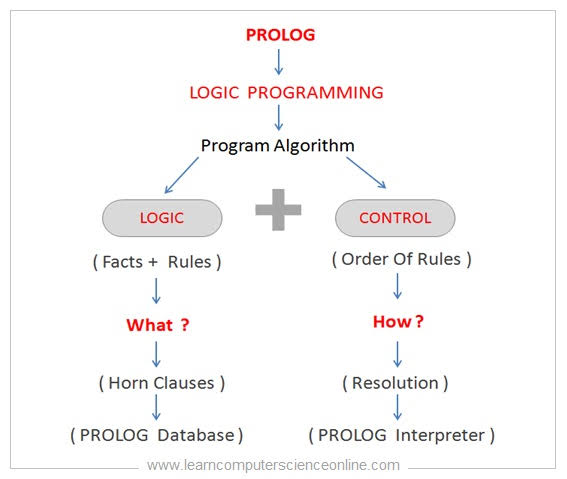
- Programming logic, variables, data types, operators, conditions, loops, and functions, is universal across every programming language.
- Mastering these concepts before focusing on any specific language gives you a transferable mental model that makes all future learning faster and more intuitive.
- Algorithms are the practical application of programming logic, breaking real problems into clear, logical, step-by-step solutions.
- Pseudocode, browser-based coding environments, and interactive platforms make it possible to learn and practice programming logic immediately, at zero cost.
Related Reading
- Previous post: Why Learning to Code Matters
- Coming up next: HTML and CSS Starter Guide
Call to Action: Subscribe for next week’s post, a hands-on starter guide to HTML and CSS, the two languages that define the structure and appearance of every webpage on the internet.