






A compelling case for why learning to code matters in 2024 and beyond, for your career, your thinking, and your ability to participate meaningfully in a technology-driven world.
Introduction
A decade ago, learning to code was the advice given almost exclusively to people who wanted to become software developers. Today, that advice applies far more broadly, to marketers who want to analyse their own data, to designers who want to bring their ideas to life, to entrepreneurs who want to build products, to scientists who want to automate analysis, and to professionals in virtually every field who want to work more effectively in digital environments. Coding has become a foundational literacy of the modern economy, not because everyone needs to become a programmer, but because understanding how software works gives you a meaningful advantage in almost any career. This post makes the case for why learning to code matters, what you actually gain from it, and how to begin regardless of your background or goals.
What Does Learning to Code Actually Mean? (Simple Explanation)

Learning to code means developing the ability to write instructions that a computer can execute, using a programming language to solve problems, automate tasks, analyse data, or build software. It does not necessarily mean becoming a full-time software engineer. At its most basic level, it means understanding the logic that underlies all digital systems, being able to write simple scripts that save you hours of manual work, and having enough fluency to communicate effectively with technical colleagues. At higher levels, it means building applications, systems, and products from scratch. The entry point is accessible to anyone, and the returns on even basic coding knowledge are significant.
Why It Matters
We live in a world built on software. The systems that process payments, deliver healthcare, distribute news, run supply chains, and connect people globally are all built on code. Professionals who understand how that code works, even at a basic level, are better equipped to contribute to, question, improve, and lead in their fields than those who treat technology as a black box. Beyond career advantage, coding develops a particular kind of problem-solving thinking, precise, logical, and iterative, that is valuable far beyond the screen.
Key Concepts You Need to Know
Coding Develops Computational Thinking
One of the most transferable benefits of learning to code is the thinking style it develops. Computational thinking involves breaking complex problems into smaller, manageable steps; identifying patterns and recurring structures; abstracting away unnecessary detail to focus on what matters; and designing step-by-step solutions that can be tested and refined. These skills improve how you approach problems in every domain, not just in software development.
Career Advantages Across Industries
Coding literacy is increasingly valued across virtually every industry. In marketing and business, professionals who can query databases and analyse data with Python or SQL make better, faster decisions than those who depend entirely on data teams. In healthcare, researchers who can write scripts to process clinical data accelerate discovery. In finance, analysts who understand algorithmic systems can evaluate and build them rather than just using them. In journalism, data journalists who can scrape and visualise data tell richer, more evidence-based stories. The competitive advantage of coding knowledge in non-technical roles is substantial and growing.
Coding Enables You to Build Things
One of the most exciting aspects of learning to code is the creative power it unlocks. With coding skills, you can build a tool to solve a problem no existing app addresses, automate a repetitive task that currently takes you hours, create a personal website or portfolio, analyse data from your own life or work, or prototype a product idea without paying someone else to build it. The ability to turn an idea into a working digital thing, however simple, is genuinely empowering.
You Do Not Need to Learn Everything
A common barrier to starting is the perception that coding requires mastering an enormous, complex landscape of languages, frameworks, and tools. In reality, most practical goals require only a small subset of that landscape. A data analyst needs Python and SQL. A web developer needs HTML, CSS, and JavaScript. A systems administrator benefits from basic shell scripting. Identifying your goal first and learning what that goal requires, rather than trying to learn everything, makes the path far more manageable.
The Best Time to Start Is Now
Coding education has never been more accessible. High-quality, free resources, freeCodeCamp, The Odin Project, CS50 from Harvard, Codecademy, Khan Academy, and countless YouTube channels, make it possible to go from complete beginner to job-ready in months with consistent effort, at zero cost. The barrier to entry is not financial or logistical, it is simply getting started.
Common Mistakes or Misconceptions
- “I am too old to learn to code.” There is no age limit on learning to programme. Career changers in their thirties, forties, and fifties regularly complete bootcamps and transition into software roles. The learning curve is real but entirely navigable for adults at any stage of their career.
- “You need to be good at maths to code.” Most programming does not require advanced mathematics. Basic arithmetic, logical thinking, and pattern recognition are far more relevant for the majority of coding tasks. Highly mathematical areas like machine learning and computer graphics are the exception, not the rule.
- “Learning to code means becoming a developer.” Coding knowledge exists on a spectrum. Writing a Python script to automate a report, building a simple website, or querying a database all involve coding, without requiring a career change or a computer science degree. Even basic coding skills deliver significant value.
Practical Next Steps
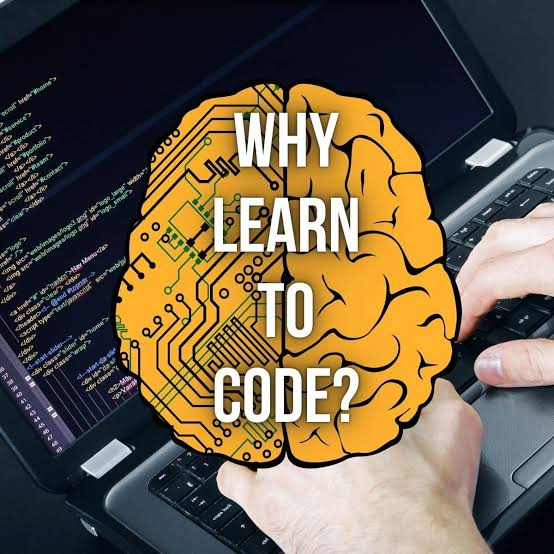
Take your first concrete steps into coding today:
- Choose a starting language based on your goals, Python is the most versatile and beginner-friendly choice for data, automation, and general problem-solving; JavaScript is the best starting point for web development. Pick one and commit to it for at least three months before considering anything else.
- Start with CS50x, Harvard’s free Introduction to Computer Science course on edX. It is widely considered the best free introduction to programming available, taught with rigour, humour, and exceptional production quality.
- Set a specific, small first project as your target, a script that renames files automatically, a webpage with your name and a short bio, a programme that calculates a simple budget. Having a concrete goal makes learning far more motivating and focused than working through exercises in isolation.
Key Takeaways
- Coding literacy is increasingly valuable across virtually every industry, not only for those who want to become developers.
- Learning to code develops computational thinking, a problem-solving approach that is transferable to every domain.
- You do not need to learn everything, identifying your goal first and learning what it requires is the most effective and sustainable approach.
- High-quality, free coding education has never been more accessible, the barrier to starting is lower than at any point in history.
Related Reading
- Previous post: Data Privacy and Personal Protection Online
- Coming up next: Programming Logic for Beginners
Call to Action: Subscribe for next week’s post, a beginner-friendly guide to programming logic, covering the fundamental concepts of variables, conditions, loops, and functions that underpin every programming language ever written.