








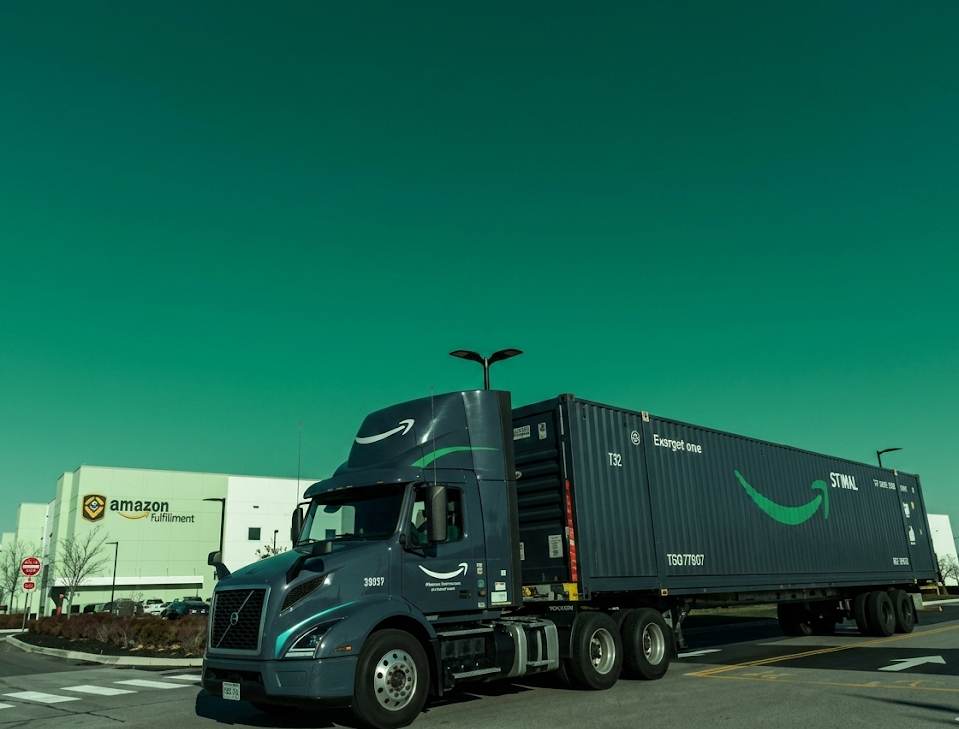
Figure 5.5
Amazon has always been known for speed, efficiency, and customer obsession. While much of the recent tech conversation focuses on AI, one of Amazon’s most impactful innovations is happening behind the scenes – in logistics automation, robotics, and next-generation fulfillment systems.
The company is quietly transforming how global e-commerce works by reinventing warehouses, delivery systems, and supply chain operations to make same-day and even faster deliveries the new normal.
At Chiidtech, we view this evolution as a powerful example of how engineering, automation, and infrastructure innovation can completely reshape industries.
The Evolution of Amazon’s Fulfillment Centers
Amazon’s fulfillment centers are no longer traditional warehouses. They are now highly advanced logistics ecosystems powered by robotics, data systems, and intelligent automation.
Inside these centers, thousands of products move across floors daily with minimal human intervention. Instead of workers manually searching shelves, automated systems now bring entire storage racks directly to employees.
This model dramatically improves speed, accuracy, and efficiency.
How Amazon Robotics Is Transforming Warehousing
Amazon has invested heavily in robotics to improve warehouse operations. These robots are designed to handle repetitive and physically demanding tasks that were once done manually.
Key capabilities of Amazon’s warehouse robotics Automated item retrieval
Robots navigate warehouse floors to pick and transport shelves directly to workers, reducing search time significantly.
- High-speed sorting systems
Packages are scanned, categorized, and routed automatically using conveyor intelligence systems. - Inventory optimization
Machine-guided storage systems place frequently ordered items in easily accessible locations to speed up fulfillment. - Reduced human error
Automation ensures greater accuracy in order selection and packaging.
This level of automation allows Amazon to process millions of orders daily with impressive precision.
The Rise of Same-Day Delivery Infrastructure
One of Amazon’s most ambitious logistics goals is expanding same-day and ultra-fast delivery services.
To achieve this, Amazon is building smaller, strategically located urban fulfillment centers closer to customers. These micro-fulfillment hubs reduce delivery distance and significantly improve speed.
How it works:
- Products are pre-stocked based on local demand patterns
- Orders are processed instantly when placed
- Items are packed and dispatched within minutes
- Delivery partners complete last-mile delivery quickly
This system is reshaping customer expectations globally, where fast delivery is no longer a luxury but a standard requirement.
Last-Mile Delivery Innovation
The most expensive and complex part of logistics is last-mile delivery ; getting products from local hubs to customers’ doors.
Amazon is innovating this area through:
- Route optimization systems that reduce travel time
- Real-time tracking for customers
- Local delivery partner networks
- Flexible delivery scheduling systems
These improvements help reduce delays, lower costs, and improve customer satisfaction.
Why This Matters for Global Businesses
Amazon’s logistics transformation is not just about faster deliveries; It represents a complete redesign of how global supply chains operate.
Key business implications:
1. Customer Expectations Have Changed
Consumers now expect fast, reliable, and predictable delivery timelines. Businesses that cannot meet this standard risk losing competitiveness.
2. Logistics Is Becoming a Tech-Driven Industry
Warehousing and distribution are no longer manual industries. They now rely heavily on software, robotics, and automation systems.
3. Efficiency Drives Profitability
Automation reduces operational costs while increasing output, allowing companies to scale faster without proportional increases in workforce size.
4. Urban Fulfillment Is the Future
Companies are moving storage closer to consumers to enable faster delivery cycles and reduce supply chain friction.
The Future of E-Commerce Logistics
The next phase of logistics innovation will likely include:
- Fully automated warehouses with minimal human involvement
- Drone and autonomous vehicle deliveries
- Predictive inventory placement systems
- Hyper-local delivery networks in major cities
- Real-time adaptive supply chains
These innovations are pushing global commerce toward a future where delivery speed and precision are competitive advantages.
Amazon’s investment in robotics and logistics innovation shows that the future of e-commerce is not only digital- it is also physical, automated, and highly optimized.
As supply chains become smarter and more efficient, businesses across the world will need to rethink how they store, move, and deliver products.
At Chiidtech, we help organizations understand and adopt modern technology systems that improve scalability, automation, and operational efficiency in a rapidly evolving digital economy.