






Figure 5.1
Modern technology is no longer evolving as isolated software tools. Instead, it is becoming part of a broader ecosystem where data, analytics, automation, cloud infrastructure, and intelligent workflows operate together as a unified operational layer.
This transformation was strongly reflected during Microsoft Fabric Community Conference (FabCon) 2026 in Atlanta, where Microsoft and Azure Databricks introduced new capabilities focused on lakehouse infrastructure, operational systems, analytics, and enterprise data management.
These announcements represent far more than routine product updates.
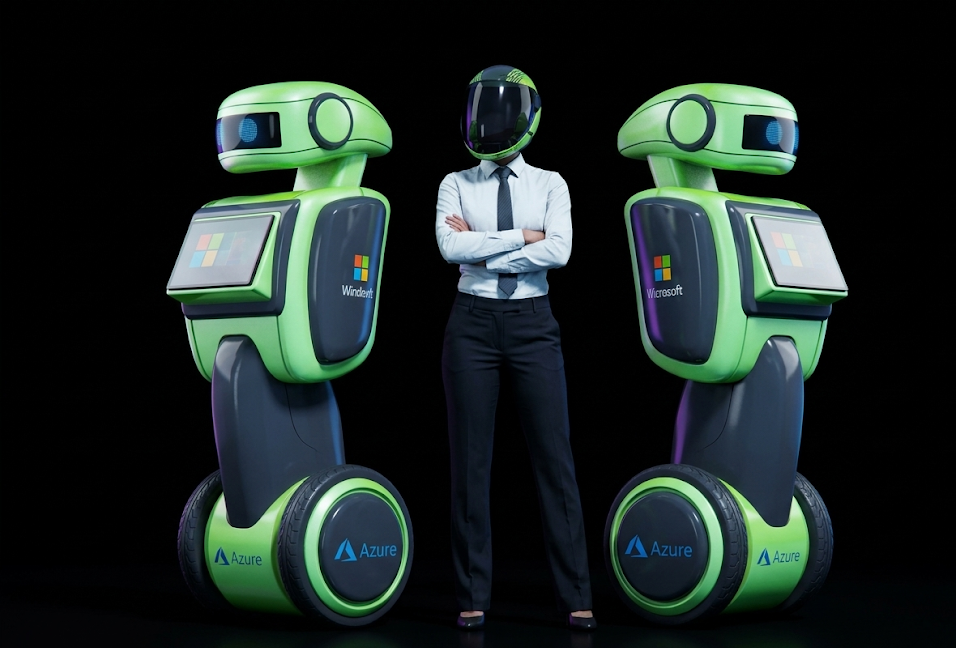
They highlight the growing transition toward what many now describe as the agentic era of enterprise computing a future where digital systems do more than process requests and instead actively participate in workflows, operational coordination, analytics, and business execution.
At ,chiidtech.com we have previously explored how automation, intelligent infrastructure, and operational technologies are reshaping the future of business systems and digital transformation.
The latest Azure and Databricks developments further reinforce how quickly this shift is accelerating globally.
Enterprise Technology Is Moving Beyond Traditional Interfaces
For years, businesses primarily interacted with modern digital systems through dashboards, chat interfaces, copilots, and automation tools.
That phase is now evolving into something much broader.
Modern enterprise platforms are increasingly becoming workflow-aware, context-driven, data-centric, autonomous, and capable of coordinating multiple operational processes simultaneously.
Rather than simply responding to commands, these systems are beginning to manage operational tasks, analyze business information, automate workflows, monitor infrastructure, and support decision-making in real time.
This is one of the clearest signs that enterprise software is shifting toward more intelligent operational infrastructure.
Why Data Infrastructure Matters More Than Ever
One of the biggest themes from FabCon 2026 was the growing importance of unified data infrastructure.
Modern operational systems are only as effective as the quality, accessibility, and governance of the data they rely on.
This explains why Azure Databricks continues investing heavily in unified lakehouse architecture, operational databases, governance systems through Unity Catalog, integrated workflows, and advanced analytics capabilities across Microsoft services.
The introduction of tools like Lakeflow Connect demonstrates how organizations are increasingly trying to simplify the movement of enterprise data into centralized operational environments.
For businesses, this matters because fragmented data remains one of the biggest barriers to scaling automation and operational efficiency effectively.
Without reliable and well-governed data systems, intelligent workflows become difficult to manage at scale.
The Rise of Operational Systems
One of the most important announcements was the expansion of Azure Databricks Lakebase, described as a database designed for modern operational workloads and autonomous systems.
This reflects a major industry transition.
Modern operational platforms increasingly require persistent workflow coordination, transactional state management, and operational memory to function effectively within enterprise environments.
In practical terms, digital systems are moving closer to functioning like active operational layers embedded directly into business environments.
This aligns closely with the broader transition toward more autonomous enterprise infrastructure that we have discussed previously at ChiidTech.
Rather than relying entirely on manual coordination, future operational systems may increasingly manage workflows, trigger actions automatically, monitor infrastructure, coordinate applications, and support business processes with minimal human intervention.
This could fundamentally reshape how enterprises interact with software over the next decade.
Microsoft Is Expanding Intelligent Workflows Into Everyday Business Tools
Another major trend emerging from the conference is the integration of advanced operational capabilities directly into familiar workplace tools.
Azure Databricks is now expanding deeper into Microsoft Teams, Excel, Power BI, Copilot, and the broader Microsoft 365 ecosystem.
This matters because adoption becomes significantly easier when advanced capabilities are embedded into tools employees already use daily.
The new Databricks Excel Add-in, Genie experiences, and mobile integrations suggest that enterprise technology is becoming less centralized around technical teams and more accessible across entire organizations.
In practical terms, business users may increasingly interact with operational systems conversationally rather than relying solely on traditional dashboards or complex analytics workflows.
The Emergence of Agentic Analytics
One of the most interesting developments announced was Genie Agent Mode.
This represents a shift from traditional analytics toward what can be described as agentic business analysis.
Instead of returning a single query result, these systems can generate research plans, test assumptions, analyze findings, refine investigations automatically, and produce narrative insights alongside visualizations.
This transforms digital systems from passive assistants into active analytical collaborators.
For enterprises, this could significantly reduce the time required for operational analysis, reporting, forecasting, and strategic decision-making.
Why This Matters for African Businesses
While many of these innovations are emerging from large global enterprise ecosystems, the implications for African startups and SMEs are significant.
Many African businesses operate with lean teams, limited operational capacity, fragmented data systems, manual workflows, and rapidly growing customer demands.
Modern operational infrastructure could help businesses automate repetitive tasks, improve customer engagement, streamline operations, and scale more efficiently.
The combination of cloud infrastructure, workflow automation, unified analytics, and intelligent operational systems may create entirely new opportunities for African innovation ecosystems.
Businesses that begin investing early in practical digital infrastructure may gain long-term operational advantages in the evolving digital economy.
The Future Is Becoming More Autonomous
The broader message from FabCon 2026 is clear:
Enterprise software is evolving toward more autonomous systems capable of coordinating data, workflows, applications, and business operations seamlessly.
This is no longer simply about chat interfaces or isolated automation tools.
It is about building operational ecosystems where intelligent infrastructure becomes embedded into the core foundation of how organizations function.
At chiidtech, we believe this transition will define the next phase of global digital transformation.
The organizations that succeed in the coming years may not necessarily be those using the most advanced tools, but those building the most effective operational systems around their data, workflows, and business processes.
The future of enterprise technology is becoming increasingly autonomous, automated, data-driven, and workflow-centric.
And that future is already unfolding.
Tags: AI Agents Automation