





Not sure which programming language to learn in 2026? Compare Python, TypeScript, Go, Rust, and more — and find the best fit for your goals.
INTRODUCTION
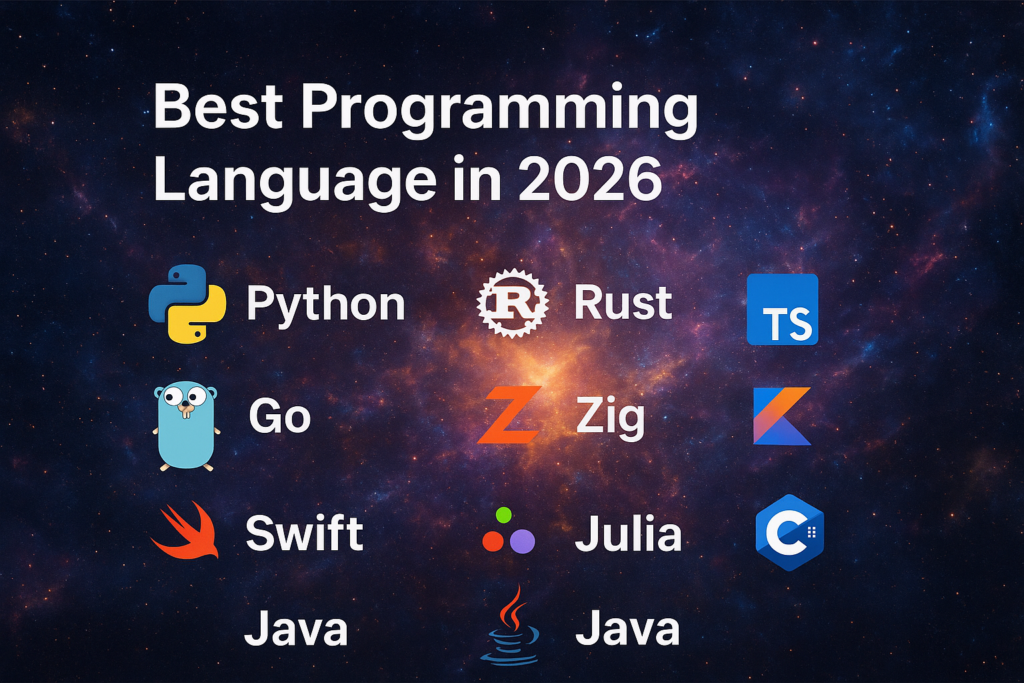
Every year, people ask the same question: Which programming language is best?
It sounds like a simple question, but it really is not. Asking for the “best” programming language is a bit like asking, what is the best vehicle? A motorcycle is great for beating traffic. A truck is better for carrying heavy loads. A bus is better for moving many people. A sports car is built for speed. None is best in every situation.
Programming languages work the same way.
In 2026, there is no one language that beats every other language in every area. The better question is this: best for what? Best for getting a job? Best for building websites? Best for AI? Best for mobile apps? Best for speed? Best for beginners?
Once you ask the right question, the answer becomes much clearer.
Python: The All-Purpose Tool in the Toolbox
Python is one of the easiest languages to read and learn. That is why beginners like it. But it is also powerful enough for professionals working in artificial intelligence, machine learning, automation, data analysis, cybersecurity, and backend development.
Think of Python like a Toyota Corolla. It may not be the flashiest car on the road, and it may not be built for racing, but it is dependable, practical, easy to use, and trusted by millions. If someone asks for a safe recommendation, Python is usually one of the first answers.
That is why, in 2026, Python still remains one of the smartest languages to learn. It gives you a wide door into tech. You can start with small scripts and grow into AI, data science, or web development without throwing away what you have learned.
Its only real weakness is that it is not always the fastest option when raw speed matters. But for many people, especially beginners and people entering AI-related fields, Python is still one of the strongest choices.
TypeScript: The Modern Builder’s Language
TypeScript is built on JavaScript, but it adds structure and safety. It helps developers catch mistakes earlier, especially when they are building large applications with many moving parts.
Imagine building a small kiosk by the roadside. You may get away with rough planning. But if you are constructing a shopping mall, you need proper measurements, rules, and checks. That is what TypeScript does for modern software. It brings order to projects that would otherwise become messy.
This is why many software teams now prefer TypeScript for building web apps, dashboards, APIs, SaaS platforms, and full-stack products. In simple terms, it helps teams build with more confidence.
TypeScript in 2026 feels a bit like using architectural blueprints instead of sketching on a napkin. Both may start the same project, but one gives you a much better chance of ending with something solid.
So if your goal is to build serious modern applications, especially on the web, TypeScript is one of the best answers you can give today.
JavaScript: The Language of the Web’s Streets
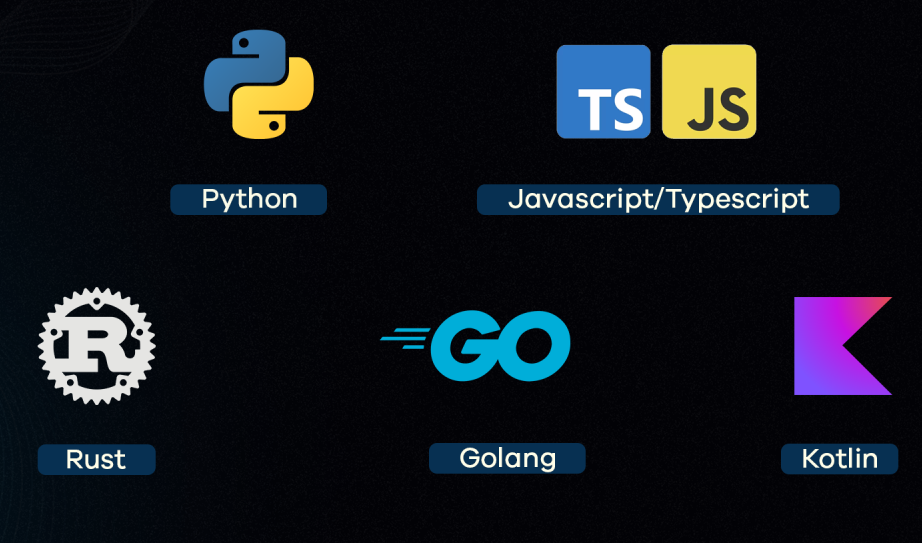
JavaScript is still everywhere.
For years, JavaScript has powered interactive websites, browser behavior, and much of modern frontend development. Even now, when people talk about TypeScript, they are still operating inside the larger JavaScript world. TypeScript has not replaced JavaScript completely; it has simply become the more structured way many teams now use it.
So JavaScript is still important. Very important. But in 2026, many developers no longer stop at plain JavaScript. They go one step further and choose TypeScript for extra safety and maintainability.
Java and C#: Some Languages Are Trendy. Others Are Dependable.
Java and C# are like experienced senior administrators in a large organization. They may not be the loudest people in the room, but serious systems keep running because of them.
Banks, enterprise systems, government software, internal business platforms, large APIs, desktop tools, and many backend services still rely heavily on Java and C#. These languages have been around for years, and that long history is actually part of their strength. They come with mature ecosystems, strong tooling, and a huge number of companies that trust them.
If your goal is to work in enterprise environments, corporate software, Microsoft-heavy systems, or large backend platforms, Java and C# remain excellent languages to learn in 2026.
Go: Simple, Fast, and Built for Movement
Developers often like Go because it is relatively simple to understand, yet powerful enough to run large-scale systems.
Go does not try too hard to impress you. It just works. It is especially attractive for developers who want a language that is easy to maintain in teams and performs well in production.
Rust: Built for Performance and Safety
Rust is different. It is designed for performance and safety, especially in areas where memory mistakes can become dangerous or expensive. That makes it attractive for systems programming, security-focused applications, infrastructure tools, and other performance-critical software.
But Rust is not the easiest language to pick up. It demands discipline. Learning it can feel a bit like moving from riding a bicycle to piloting an aircraft. The reward is control, safety, and confidence, but the training is tougher.
If you want to work close to the hardware, write highly efficient code, or build systems where reliability matters deeply, Rust is one of the strongest long-term bets in 2026.
C and C++: Still Powerful Where It Counts
C and C++ are still important, especially where low-level control matters.
They are powerful, close to the metal, and built for serious work. Operating systems, game engines, embedded systems, firmware, and performance-intensive applications still depend on them.
They are not usually the easiest starting point for beginners, because they require more care and a deeper understanding of how computers work. But for specialized fields, they remain extremely valuable.
These languages are not fading because the industries that need them have not disappeared.
So, Which One Is Actually the Best?
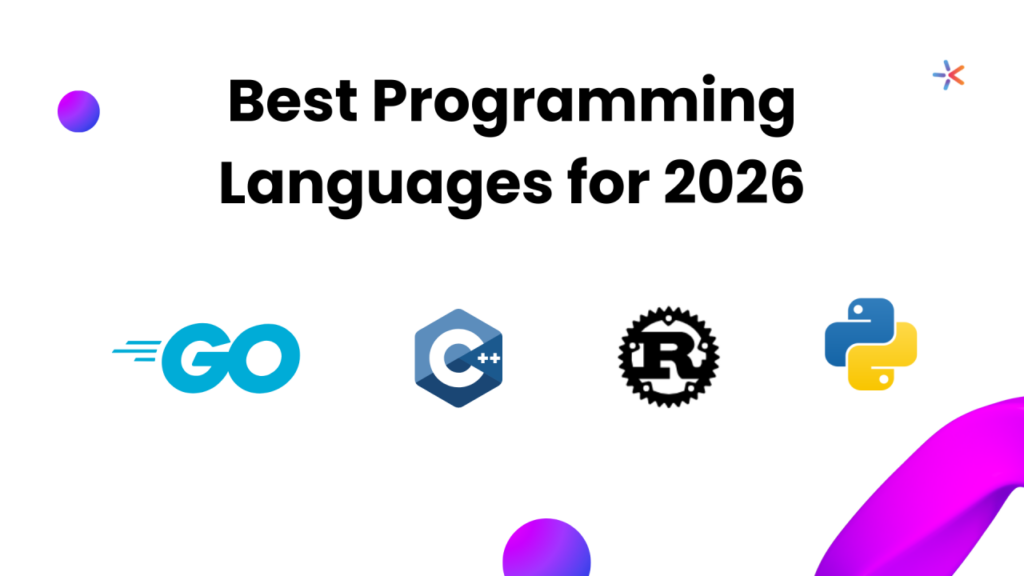
The honest answer is this:
The best programming language in 2026 depends on the road you want to travel.
If you are a beginner, Python or JavaScript is probably the best place to start. It is friendly, practical, and opens many doors.
If you want to build modern websites, web apps, dashboards, SaaS products, or full-stack applications, TypeScript is one of the best choices you can make.
If you want enterprise jobs, backend systems, or corporate software, Java and C# remain excellent.
If you want cloud infrastructure and scalable backend services, Go is a strong option.
If you want performance, safety, and systems-level engineering, Rust stands out.
If you want embedded systems, engines, or hardware-near development, C and C++ still matter a lot.
Final Thought
Choosing a programming language is a bit like choosing a path in life. You do not need the tool that does everything. You need the one that helps you move in the direction you want.
So instead of chasing whatever is trending, think about what you want to build.
Do you want to work in AI? Build websites? Get an enterprise job? Create mobile apps? Develop cloud systems? Work close to hardware?
Once you answer that, the “best” language stops being confusing.
In 2026, Python is still the safest all-round choice, while TypeScript is one of the strongest choices for building modern applications. But the real winner is not the language with the loudest hype. It is the language that fits your goals, your learning style, and the kind of problems you want to solve.
A hammer is not better than a screwdriver. It depends on whether you are driving a nail or tightening a screw.
That is exactly how programming languages work.
Which language are you learning right now — or planning to learn? Drop it in the comments below.