







Going viral can break your website. Learn why scalability matters and how to prepare your site to handle sudden traffic spikes before they become costly.
INTRODUCTION BLOCK
Every website owner wants growth. More visitors. More customers. More shares. More attention. More visibility. But there is a question many business owners forget to ask before that growth arrives: can the website actually survive success? This is where software engineering meets business reality. A website that works for 100 visitors is not automatically ready for 10,000. A site that feels stable on normal days may collapse under pressure when traffic suddenly spikes. And when that happens, the business does not just lose performance. It loses opportunity. Going viral sounds exciting. But if the website cannot handle it, virality can expose every weakness at once.
Success Creates Pressure
Many website owners assume that traffic problems are a sign of failure in planning or hosting. But sometimes traffic problems come from something positive: people are finally paying attention. A social media mention, a trending post, a major event, a paid campaign, a news feature, or a popular referral can suddenly push thousands of users to the same website at the same time. That is exactly the kind of outcome a business hopes for. Yet that is also the moment weak systems begin to break. Pages load slowly. Images fail. Databases struggle. Checkout pages freeze. Error messages appear. Users refresh repeatedly. Servers become overwhelmed. The business worked hard to attract attention, only to become unavailable when the audience arrived.
A Website Crash Is Not Just a Technical Issue
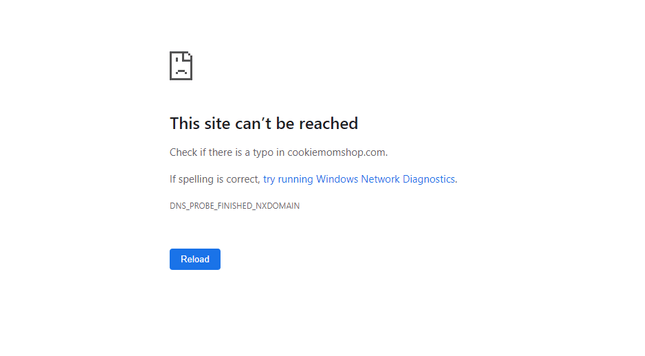
When a site goes down during a traffic spike, many owners think of it as a short technical inconvenience. But the business cost is much larger than that. A crashed or unstable website can mean: lost sales, lost ad revenue, lost leads, lost search trust, lost brand confidence, and lost momentum. The biggest cost is often the opportunity that never returns. A user who visits your site during a key moment and finds it broken may not come back. Online audiences move quickly. They rarely wait. A failed experience during peak attention can waste the exact visibility the business spent months trying to earn.
Viral Traffic Reveals Weak Foundations
Traffic spikes do not create weaknesses. They reveal them. A site that slows down badly under pressure was already fragile. The surge simply exposes the limits of its infrastructure, architecture, or software design. Sometimes the issue is cheap hosting. Sometimes it is inefficient code. Sometimes it is too many plugins, no caching, oversized images, poor database queries, or weak content delivery setup. In many cases, it is a combination of several small issues that become severe only when many people arrive at once. This is why scalability matters. Scalability means a system can handle increased demand without falling apart. It is one of the most overlooked ideas among non-technical website owners because things often seem fine until the moment they are not.
Not All Traffic Is Equal
A business owner may say, “My site has had thousands of visitors before.” But traffic patterns matter. There is a major difference between 10,000 visitors spread across a day and 10,000 visitors arriving within ten minutes. The first is manageable for many systems. The second is far more stressful because requests hit the server at once. Pages, databases, media files, login areas, and plugins all experience pressure simultaneously. This is where many websites fail. They were designed for steady traffic, not bursts of demand. Success is not just about volume. It is about intensity.
Mobile Users Make the Challenge Bigger

When a website gets attention, a large share of that traffic often comes from mobile phones. That brings its own demands. Mobile users may be on slower networks. They may abandon even faster if a page takes too long. They may be coming from social media platforms where patience is low and expectations are immediate. If your site is heavy, cluttered, or badly optimized for mobile, then viral traffic will not just test your server. It will test your user experience too. A technically available site can still fail if the mobile experience is frustrating enough to make visitors leave.
Why Many Business Owners Prepare Too Late
Most businesses think about scalability only after a traffic incident. The site slows down during a campaign. A big story drives readers in. The server starts showing errors. Ads stop displaying properly. Customers begin to complain. Only then does the owner ask whether the website is built to handle demand. That is like waiting for a crowded event to begin before checking whether the building has enough doors. In software engineering, some problems are much easier to prevent than to fix during live pressure. When the site is already struggling, every minute matters, and every rushed fix carries risk. Preparation is cheaper and calmer than emergency response.
Going Viral Without Readiness Can Damage Trust
Trust is one of the first casualties of poor scalability. Visitors do not usually think, “This website is having a technical scaling challenge.” They think, “This site is unreliable.” That perception affects how people view the business itself. If an online store freezes during checkout, users may hesitate to enter payment details. If a news site fails under pressure, readers may go elsewhere. If a service website breaks when inquiries are high, leads may never convert. A good website does more than attract traffic. It remains dependable when attention increases.
What Helps a Website Survive Sudden Growth
A site becomes more resilient when it is designed with pressure in mind. That usually includes stronger hosting, good caching, optimized images, lean plugins, clean code, efficient databases, and delivery systems that reduce load on the origin server. It also means monitoring, testing, and understanding where the real bottlenecks are before a traffic spike happens. The goal is not perfection. The goal is stability under success. Business owners do not need to master all the technical details themselves, but they do need to understand that scalability is not a luxury reserved for giant companies. It matters to any business that wants growth. Because growth without readiness can become a self-defeating moment.
The Irony of Digital Success
One of the strangest things about websites is that failure often appears at the exact moment the business is finally getting noticed. That irony catches many owners off guard. They work hard to earn visibility, then the visibility breaks the site. The celebration turns into technical firefighting. This is why scalability should not be treated as a future problem for “when we get bigger.” It should be treated as part of current business planning. A website does not need to be massive before resilience matters. It only needs one strong wave of attention.
Conclusion
Going viral is not just about being seen. It is about being ready when people arrive. A website that cannot handle success turns attention into frustration and momentum into loss. That is why website owners must think beyond design and content alone. They must ask whether the system underneath can support the business goals on top of it. Because in the digital world, surviving growth is part of earning it.