






Figure 4.5
What happens when your computer stops behaving like a machine and starts behaving more like an intelligent partner?
For decades, personal computing has revolved around one core idea: humans adapt to software. We learn interfaces, memorize workflows, open apps manually, switch tabs endlessly, and organize our digital lives around systems designed primarily for efficiency rather than understanding.
But artificial intelligence is beginning to change that relationship completely.
The next era of computing may not be defined by faster processors or thinner laptops. It may be defined by operating systems capable of understanding context, anticipating intent, and assisting users proactively in real time.
And if that future sounds distant, it is already beginning.
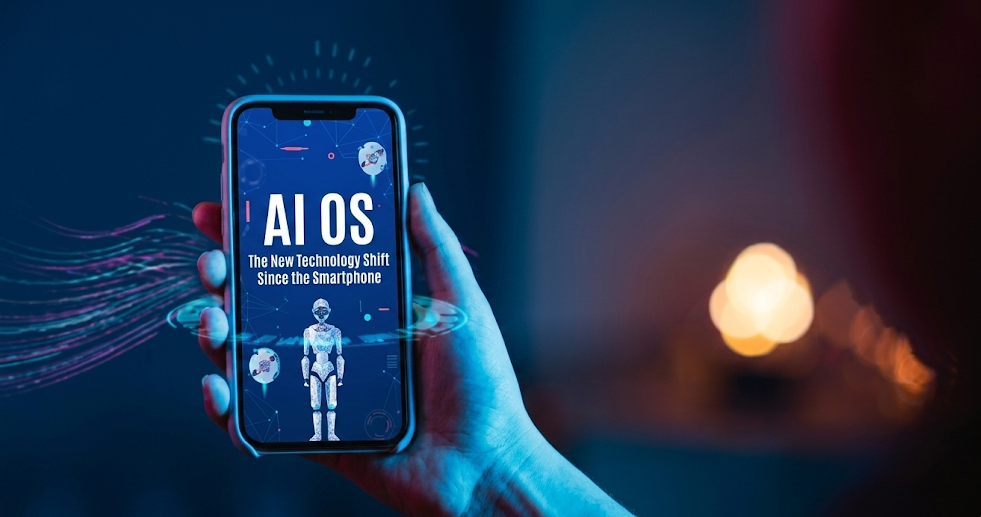
As explored in Why AI Operating Systems Could Redefine Personal Computing, the rise of AI-native computing environments is quietly reshaping what users expect from their devices. The operating system is evolving from a passive platform into an intelligent layer that actively participates in work, communication, creativity, and decision-making.
This shift could become as significant as the smartphone revolution itself.
From Operating Systems to Intelligence Systems
Traditional operating systems were designed around task management.
Open an application.
Perform an action.
Save a file.
Switch windows.
Repeat.
That model worked for decades because software primarily responded to direct commands. Computers waited for users to tell them what to do.
AI changes the equation.
Modern AI systems can now interpret language, analyze patterns, summarize information, automate repetitive tasks, and generate content in real time. That means the operating system itself no longer has to remain passive.
Instead of acting as a container for applications, future operating systems may function as intelligent coordinators sitting between the user and every digital interaction.
This is the transition from operating system → intelligence system.
And it fundamentally changes personal computing.
The End of the Traditional Interface
One of the biggest limitations of current computing is interface friction.
Users constantly move between tabs, apps, windows, notifications, and disconnected workflows. Productivity often feels less like focused work and more like digital navigation.
AI-native operating systems aim to reduce that friction dramatically.
Imagine opening your laptop and having your system already understand:
- Which project you are working on
- Which documents are relevant
- Which meetings matter most today
- Which emails require urgent responses
- Which tasks are blocking your workflow
Instead of manually organizing information, the system organizes context for you.
The interface becomes less about clicking and more about intention.
This is why AI assistants are becoming increasingly integrated into operating systems themselves rather than existing as standalone apps.
The goal is not simply to provide answers.
The goal is to create adaptive computing environments.
Browsers Are Quietly Becoming AI Platforms
This transformation is not limited to operating systems alone.
Browsers are also evolving into intelligence layers.
In Why AI Browsers Could Become the Next Big Battle in Tech, we explored how browsers may become one of the most competitive frontiers in AI computing.
Historically, browsers were gateways to the internet.
Now, they are becoming active participants in how information is interpreted, summarized, and acted upon.
AI-powered browsers could soon:
- Summarize entire research sessions instantly
- Automate repetitive online workflows
- Understand browsing intent contextually
- Organize information dynamically
- Reduce the need for constant tab switching
The browser is no longer just software.
It is becoming an intelligent workspace.
And when combined with AI-native operating systems, the result could fundamentally redefine digital productivity.
The Workforce Will Change Alongside the Technology
As intelligent systems become embedded into everyday computing, the workplace itself is beginning to evolve.
In Why the Future of Work Will Belong to People Who Can Work With AI, Not Against It, we explored how the most valuable professionals in the AI era may not be those resisting automation, but those learning how to collaborate effectively with intelligent systems.
That transition is now extending directly into the devices people use every day.
Future operating systems may not simply execute commands. They may actively assist with prioritization, research, scheduling, workflow optimization, communication management, and creative problem-solving.
This changes the role of software completely.
Computers stop becoming passive tools and start becoming active collaborators.
Why Access Alone Is No Longer Enough
The rise of AI-native computing also highlights a much larger global challenge.
Access to technology alone is no longer sufficient.
As discussed in Why the Future of Technology Depends on More Than Just Access, the next digital divide may not simply be about internet connectivity or device ownership. Increasingly, it may revolve around digital capability, AI fluency, and the ability to work effectively within intelligent digital ecosystems.
Having access to advanced AI-powered devices will matter far less than understanding how to use them strategically.
The future may belong to individuals, businesses, and societies capable of adapting quickly to intelligence-driven environments.
This is why AI literacy, technical education, and digital adaptability are becoming as important as connectivity itself.
The Real Race is Ecosystem Intelligence
What makes this moment especially important is that the competition is no longer just about hardware specifications.
The next major technology race may revolve around ecosystem intelligence.
Which company can build the most context-aware computing environment?
Which ecosystem integrates devices most seamlessly?
Which AI assistant understands users most effectively across work, communication, creativity, and daily life?
This is why major technology companies are aggressively investing in AI assistants, cross-device ecosystems, and intelligent workflow integration.
The future of computing may belong less to isolated devices and more to deeply connected intelligence ecosystems.
In that world, laptops, browsers, smartphones, cloud platforms, and AI systems stop functioning as separate products.
They become one continuous experience.
The Risks of Intelligent Computing
Of course, this shift also raises serious questions.
The more intelligent systems become, the more access they require to user data, behavior patterns, communication history, and workflow habits.
That creates growing concerns around:
- Privacy
- Data ownership
- Surveillance risks
- AI bias
- Overdependence on automation
- Security vulnerabilities
If operating systems become proactive intelligence layers, trust becomes just as important as functionality.
The companies leading this next era of computing will not only need powerful AI systems. They will need strong governance, transparent data practices, and responsible AI design principles.
Because intelligent computing without trust creates instability instead of progress.
The Future of Computing Will Feel Different
Every major computing era changed how humans interacted with technology.
The desktop era introduced graphical interfaces.
The internet era connected information globally.
The smartphone era made computing mobile.
The AI era may make computing adaptive.
And that distinction matters.
Future computers may no longer feel like tools we operate manually every second.
They may feel more like intelligent environments that continuously evolve around human behavior, needs, and goals.
That is a much bigger shift than another hardware upgrade.
It is a redesign of the relationship between humans and machines.
And we are only beginning to see the first version of it.
Key Takeaways
- AI-native operating systems could redefine personal computing entirely
- The future of computing is shifting from task-based systems to context-aware intelligence systems
- Browsers are evolving into AI-powered productivity environments
- Businesses may experience major workflow transformation through intelligent computing
- Cross-device ecosystem intelligence could become the next major tech battleground
- Privacy, governance, and trust will become central to AI-driven operating systems
- The AI era is changing not just software, but the human-computer relationship itself
The smartphone changed how humans access technology.
AI-native operating systems may change how technology understands humans.
And that could become one of the most important technology shifts of the next decade.
Read more AI analysis, digital transformation insights, and future-of-technology stories on ChiidTech.