


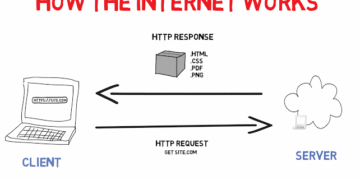






Figure1
As software systems grow, maintaining clarity and simplicity becomes increasingly difficult. Small projects often begin with elegant, understandable codebases that are easy to modify and maintain. However, as features expand, teams grow, and requirements evolve, systems frequently become more complicated, harder to reason about, and significantly more expensive to maintain.
This growing complexity is one of the greatest challenges in software engineering. When left unmanaged, it slows development, increases operational risk, and reduces the ability of organizations to innovate quickly.
In many cases, overly complex systems are informally described as a “big ball of mud”a tangled architecture with unclear structure, tightly coupled components, and code that is difficult to understand or safely modify.
The Hidden Cost of Complexity
Complexity rarely appears all at once. Instead, it accumulates gradually through years of:
- Temporary fixes and workarounds
- Performance optimizations added under pressure
- Special-case logic for edge scenarios
- Rapid feature additions without refactoring
- Inconsistent coding patterns across teams
- Poor documentation and unclear ownership
At first, these changes may seem harmless. Over time, however, they create systems that are increasingly difficult to maintain.
As complexity grows:
- Development slows down
- Debugging becomes more difficult
- Testing becomes less reliable
- Onboarding new engineers takes longer
- Small changes introduce unexpected side effects
- Technical debt compounds over time
This creates a dangerous cycle where teams spend more time managing the system than improving it.
Complexity Increases the Risk of Failure
One of the most serious consequences of complexity is the increased likelihood of introducing bugs.
In highly complex systems, developers often struggle to fully understand:
- Hidden assumptions within the codebase
- Dependencies between components
- Side effects caused by small modifications
- Unexpected interactions between modules
As a result, even seemingly minor changes can trigger cascading failures.
This is why maintainability is deeply connected to simplicity. Systems that are easier to understand are also:
- Easier to test
- Easier to debug
- Easier to evolve
- Easier to secure
- Easier to operate reliably
Reducing complexity is therefore not just a design preference, it is a critical engineering goal.
Accidental Complexity vs Essential Complexity
Not all complexity can be avoided. Some complexity is essential, meaning it is inherent to the problem being solved.
For example:
- Financial systems naturally involve complicated business rules
- Distributed systems must handle network failures and consistency challenges
- Real-time platforms require sophisticated synchronization mechanisms
However, much of the complexity found in software systems is accidental complexity, complexity introduced by implementation decisions rather than actual user needs.
Accidental complexity often comes from:
- Poor architectural choices
- Over-engineering
- Inconsistent abstractions
- Excessive dependencies
- Lack of modularity
The goal of good software design is not to eliminate all complexity, but to remove as much accidental complexity as possible.
Abstraction: One of the Most Powerful Tools in Software Engineering
One of the most effective ways to manage complexity is through abstraction.
Abstraction allows engineers to hide unnecessary implementation details behind clean and understandable interfaces. Instead of dealing with low-level complexity directly, developers interact with simplified models that are easier to reason about.
For example:
- High-level programming languages abstract away machine code and CPU instructions
- Databases and SQL abstract complex storage engines and concurrency handling
- Frameworks and APIs simplify repetitive implementation details
Good abstractions improve productivity because developers can focus on solving business problems rather than repeatedly dealing with low-level technical details.
The Value of Reusable Components
Strong abstractions also encourage reuse.
Reusable components provide several benefits:
- Reduced duplication of effort
- Consistent implementation patterns
- Easier maintenance and updates
- Improved software quality across systems
When an abstraction is improved or fixed, all systems that rely on it benefit automatically. This creates long-term efficiency and stability.
Examples include:
- Authentication libraries
- Shared design systems
- Logging frameworks
- Database access layers
- Cloud infrastructure modules
Reusable abstractions are foundational to scalable engineering organizations.
Why Finding Good Abstractions Is Difficult
Despite their value, designing effective abstractions is extremely challenging.
A poor abstraction can:
- Hide important behavior
- Introduce confusion
- Limit flexibility
- Increase coupling
- Create performance bottlenecks
In distributed systems especially, finding the right abstractions is difficult because the underlying problems—network reliability, concurrency, and data consistency-are inherently complex.
Good abstractions strike a balance:
- Simple enough to understand
- Flexible enough to evolve
- Powerful enough to solve real problems
This balance is one of the hallmarks of excellent software engineering.
Common Symptoms of Excessive Complexity
Complex systems often display recognizable warning signs, including:
1. Tight Coupling
Components become heavily dependent on each other, making changes risky and difficult.
2. Tangled Dependencies
Modules rely on one another in confusing or circular ways, reducing modularity.
3. Inconsistent Naming and Terminology
Different teams use different terms for the same concepts, creating confusion and communication gaps.
4. State Space Explosion
The number of possible system states becomes too large to reason about effectively.
5. Fragile Codebases
Small changes unexpectedly break unrelated functionality.
6. Overly Complex Configuration
Systems require excessive manual setup and become difficult to deploy or troubleshoot.
7. Lack of Clear Ownership
No one fully understands or maintains certain parts of the system.
Recognizing these symptoms early is essential for preventing long-term maintenance problems.
Practical Strategies for Managing Complexity
Engineering teams can actively reduce complexity by adopting strong design practices:
- Favor simple solutions over clever ones
- Keep modules small and focused
- Invest in documentation and clear naming
- Refactor continuously instead of delaying cleanup
- Reduce unnecessary dependencies
- Use standardized patterns and tooling
- Prioritize readability over short-term optimization
- Design APIs and interfaces thoughtfully
- Automate repetitive tasks where possible
Simplicity requires discipline. It is often harder to build simple systems than complex ones because simplicity demands clarity of thought and careful design decisions.
The Relationship Between Simplicity and Innovation
Organizations that successfully manage complexity are often able to innovate faster.
Simple systems allow teams to:
- Ship features more quickly
- Recover from failures faster
- Onboard engineers efficiently
- Experiment with lower risk
- Scale engineering operations more effectively
Complex systems, on the other hand, slow decision-making and create fear around change.
In many technology companies, engineering velocity is limited not by talent, but by system complexity.
Conclusion: Simplicity Is a Long-Term Investment
Simplicity in software engineering is not about building systems with fewer features.it is about building systems that remain understandable, adaptable, and maintainable as they grow.
As software evolves, complexity naturally increases. Without deliberate effort, systems can become difficult to operate, risky to modify, and expensive to maintain. The longer this complexity remains unchecked, the more it impacts productivity, reliability, and innovation.
Managing complexity requires intentional architectural decisions, clear abstractions, disciplined engineering practices, and a continuous commitment to reducing accidental complexity wherever possible.
Teams that prioritize simplicity create systems that are easier to understand, easier to scale, and easier to evolve over time. These systems support faster development cycles, better collaboration, and more sustainable growth.
In modern software engineering, simplicity is not a luxury or aesthetic preference.it is one of the most important foundations of long-term success.