







Nokia has launched agentic AI capabilities for its fixed network product lines, and for telecom operators managing millions of broadband lines, this is a significant shift. Networks are moving beyond passive connectivity into something that can reason, decide, and act on its own.
What is agentic AI, and why does broadband need it?
Standard AI can classify data and flag issues. Agentic AI goes further — it chains together multiple reasoning steps, takes autonomous actions, and resolves problems end-to-end without waiting for a human to push a button. For a broadband network serving millions of homes, that distinction matters enormously.
Nokia’s new agentic capabilities are embedded across its Altiplano, Corteca, and Broadband Easy platforms — the same platforms already running on over 600 million broadband lines worldwide. That operational depth is what makes this credible: the AI isn’t trained on synthetic data, it’s built on real-world network behavior at massive scale.
| 600M+broadband lines of training data | >50%first-contact helpdesk resolution target | 5 minnetwork incident qualification | 50%reduction in repeat site visits |
What Nokia’s AI agents actually do
Nokia’s announcement covers the full broadband lifecycle — from initial fiber design and planning, through rollout, all the way to day-to-day operations. The AI agents aren’t a single product layer; they’re woven into existing workflows for three distinct teams.
For field technicians
Technicians get AI-powered voice, text, and image guidance during surveys and installations. Computer vision technology validates the quality of work completed and contributes to building a live digital twin of the fiber-to-the-home (FTTH) network. That digital twin becomes progressively smarter with every installation.
For helpdesk and support teams
A conversational AI assistant gives support staff instant access to product knowledge, reducing training ramp-up time and accelerating resolution during live calls. A dedicated troubleshooting agent conducts automated root cause analysis, pinpoints faults faster, and reduces ticket volume — with the goal of lifting first-contact resolution above 50%.
For network engineers
Automated diagnostics proactively detect degradations and prevent outages before customers notice them. Network incidents can be qualified within five minutes — a capability that previously required manual investigation and often took hours.
“AI makes your end-users less likely to churn, your engineering and helpdesk teams more productive, and your field teams connect more homes more quickly. Nokia’s Agentic AI puts 600+ million lines worth of broadband experience at the fingertips of every field technician, helpdesk agent, and network engineer, and solves problems before the customer is even aware.”
— Sandy Motley, President, Fixed Networks, Nokia
The open architecture advantage
One of the more strategically interesting elements of Nokia’s approach is its insistence on openness. Telecom providers retain full control over which large language model they use, which data sources they connect, and which interfaces they deploy. Nokia isn’t building a walled garden — it’s building a framework.
This matters for operators who already have vendor relationships or proprietary data assets they want to bring into their AI strategy. The architecture supports compliance, data sovereignty, and vendor independence, which are non-negotiable requirements for most large telecom providers operating across multiple regulatory jurisdictions.
Independent analyst firm Appledore Research has noted that Nokia’s approach reflects the right architectural principles — including autonomous control loops, structured data models, and open APIs — which are critical for making automation reliable and AI outputs accurate.
The market backdrop: $6.2 billion and counting
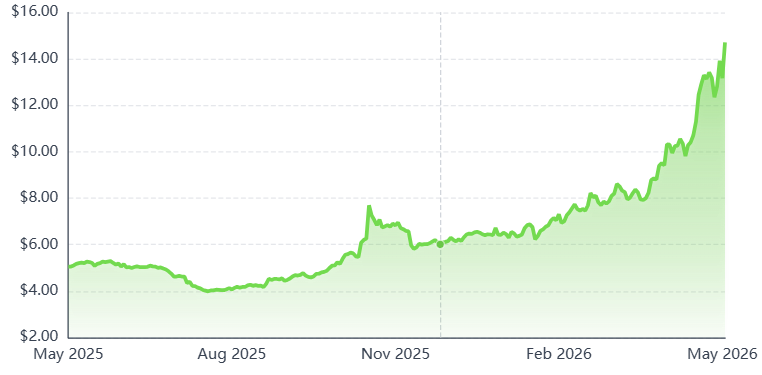
Nokia’s launch comes at a moment when the telecom industry is accelerating hard into AI infrastructure. The sector is projected to invest $6.2 billion in agentic AI by 2030. The timing of Nokia’s announcement also appears to have resonated with investors — Nokia’s stock jumped 12% the day after the announcement, reaching its highest valuation since 2009.
Whether that premium is justified over the long term depends on how broadly telecom providers adopt self-healing networks. But the early signals are clear: the market views Nokia’s depth of broadband data and its embedded position in operator workflows as a genuine competitive moat.
Key takeaways for telecom decision-makers
- Agentic AI isn’t a future concept — Nokia’s capabilities are live across Altiplano, Corteca, and Broadband Easy today.
- Operational gains are measurable: first-contact resolution above 50%, incident qualification in under five minutes, and 50% fewer repeat field visits.
- The open architecture means operators aren’t locked into Nokia’s AI stack — they can integrate their own LLMs and data sources.
- The 600M+ lines of training data gives Nokia’s AI a contextual depth that’s difficult for new entrants to replicate quickly.
- Customer churn reduction and field force productivity are the business cases Nokia is leading with — not abstract AI capability.
For operators still evaluating where to begin with AI, Nokia’s framing is a useful reference point: start with the workflows where data is already rich (helpdesk logs, field reports, network telemetry) and let the agent build from there. The infrastructure is maturing fast — and the case for waiting is getting harder to make.